How to Start a Waste Management Business
Starting a waste management business is one of the more lucrative ways to build a service company right now. Governments are scrambling for solutions to combat the growing mountains of waste and manage landfills efficiently. Left unchecked, this influx of trash endangers our health through streets lined with harmful bacteria; therefore, recycling is vital not only for ourselves but also in order to protect the future of our planet.
As proud owners of the world’s leading waste management software, we have a great track record of success in helping waste businesses reach their goals. Below we will delve into each aspect of the industry and identify the most integral components for your understanding.
TL;DR
- Secure trucking and driver license permits before buying equipment.
- Invest in durable, high-quality collection trucks and containers.
- Build a reliable, trained team to run your routes.
- Use routing software to optimize daily collections.
What is a Waste Management Business?
A waste management business specializes in the collection, transportation, and disposal of solid waste. The goal of this type of business is to create an efficient system for disposing and recycling materials in a way that maximizes profitability while reducing environmental impacts. This can be achieved through careful planning and consideration of factors such as location, collection technology, customer service, and pricing.
Find The Right Sector Within the Waste Management Industry
Not every waste management business looks the same. Residential curbside collection serves individual households on a subscription basis, while commercial dumpster service handles businesses, retailers, and offices with larger containers and contract-based pricing. Choosing between them, or offering both, shapes your equipment needs and revenue model from day one.
Beyond the residential-commercial split, several specialized sectors offer strong margins for operators willing to handle stricter compliance requirements which has a lower barrier to entry than most. Hazardous waste, electronic waste recycling, and medical waste disposal all command premium pricing but require additional permits and handling procedures.
Organic waste diversion and composting are also opening new revenue streams, as more states pass mandates requiring haulers to separate and process organic material instead of sending it to landfills. Check your local environmental regulations before committing to a sector, since requirements vary widely by state and municipality.
Benefits of Starting a Waste Management Business
Waste management is one of the few industries where demand never really dries up: homes get renovated, businesses generate debris, and someone always needs it hauled away. Here’s what experience has taught us about the real advantages of getting into this business.
1. High Profit Potential
The most essential benefit of starting a waste management business is that it can be quite profitable, as it makes your customers return for more. By offering professional waste collection and disposal services, you are helping them avoid pricey bulky goods removal fees – no need to hire a private service or pay for dumpster rental costs! Clients are usually happy with the money-savings that waste businesses can offer and tend to have a high return rate. If you want to see real profit numbers, our breakdown of how profitable a dumpster rental business can be is a good reference point.
2. Eliminate contamination of landfills
Waste management businesses are essential for the preservation of our environment and planet. They diminish contamination in landfills by collecting, transporting, and disposing of waste responsibly. By taking part in this endeavor, you can make a positive contribution to keeping our world beautiful and healthy!
3. Creates job openings
One of the most significant advantages of starting a waste management business is that it provides employment opportunities to those living in your area. By hiring staff for collection and disposal, you can create a source of income for citizens who are eager to work – this also stimulates the local economy!
4. It promotes the recycling and reuse of materials
Reusing materials is an efficient way to reduce the amount of waste being dumped into landfills. By encouraging your customers to recycle and reuse products, you are helping them become more mindful and active participants in protecting our planet. Moreover, this also helps generate additional revenue for your business as recycled goods have a higher resale value than new ones.
5. It contributes to a cleaner environment
Finally, waste management businesses are instrumental in maintaining clean and safe neighborhoods. By implementing efficient collection services, you can help reduce the amount of trash that accumulates on roadsides and parks – providing an overall cleaner environment for everyone!
The countless rewards of having a waste management business make it evident that taking action and starting one is crucial. Make the first move right now by finding out more about creating your own company today! From understanding the industry to implementing strategies that will aid you in succeeding, our article on “How to Start a Dumpster Rental Business” is also here to help!
How to Start a Successful Waste Management Business in 8 Steps
Before starting a waste management business, it’s wise to plan ahead and take adequate safety precautions. But no need to fret – we’re here to support you in making those informed decisions.
1. Research the Market and Identify Potential Customers
It is vital to do your homework and research the market before setting up your company. Identify opportunities in your area and find out what services are already being offered by competitors. If you want to get the best, most comprehensive data, don’t be limited to just Google,use different search engines too. Also, take a look at which main businesses are offering their services in your local area. If you want a wider audience reach, analyze each location thoroughly and carefully. For real industry benchmarks like average rental pricing and dumpster size utilization, Docket’s dumpster rental industry benchmark report is a useful starting point.
Additionally, delve into the requirements of your customers and pinpoint potential clients. Examine their preferences such as collection technology, service quality, etc. By investigating unfinished needs you are opening doors to new opportunities for success in business. As an example, take a look at some of the most competitive markets and cities like New York City or Los Angeles. Analyze the top 5 businesses in those areas to gain insight into their approaches and tactics; after all, they have worked hard to become successful so their ideas are worth learning from. With thorough research, you can accurately estimate the need for waste management services and create a detailed business plan suited to your needs.
2. Develop a Comprehensive Business Plan
Gather your most trusty pencils and sketch pads, because this step is monumental. Don’t just create a basic plan: craft an extensive business blueprint that outlines the goals and objectives of your enterprise with precision!

If you want your waste management business to be a success, it is essential that you take the time to document plans for future growth, financial projections, management structure, and marketing strategies in a detailed business plan. By putting in the effort now to define these details precisely and thoroughly, you will have greater clarity about how your venture will operate.
3. Obtain Necessary Licenses and Permits
You must have the required licenses and permits to operate a waste management business in your city or state. You’ll need to register your company with local authorities, obtain insurance coverage, gain access to disposal sites, and secure environmental compliance documents. These processes vary from state to state, so it’s important to research and understand the regulations in your area.
Check out NYC Waste Removal Licences for example.
4. Secure Funding to Get Your Business Started
Starting your own business is no small feat, and it often requires a significant amount of financial investment. As such, you’ll need to secure funding from lenders or investors who are willing to support your venture.
You can approach banks, venture capital firms, and private investors to make your case. Prepare a compelling pitch that outlines your plans for the business and the expected returns it will generate. Make sure to have all of your financial documents in order as well so you can be ready when prospective lenders or investors ask to review them.
Once you have secured the necessary funds, you can start purchasing equipment and hiring staff – ensuring that everything is in place before officially launching your business.
5. Invest in the Right Waste Equipment
Though this point might appear insignificant, we’ve discovered that it can be the deciding factor in your success. Thus, we will provide you with the steps our most successful customers took to succeed within waste management. By adhering to these same strategies and tactics, you should find yourself on a path toward achieving your desired level of success sooner rather than later.
Determine the Type of Equipment
To keep your business operations running smoothly, it’s essential to have the correct size and type of indoor/outdoor equipment for collecting and disposing of waste. Having the appropriate tools can ramp up your waste diversion program’s efficiency, guarantee employee safety, and minimize contamination. Some of this machinery will be provided by your hauler while other pieces may need you to purchase them yourself. We offer you an overview of the collection equipment offered by hauling companies, along with machinery to collect and transfer material within your facility. Ultimately, the optimal equipment for your business will be based on its type, generated waste stream, space limitations, and other factors.
- Dumpsters: Dumpsters are the containers used to collect and transport material from your facility to a disposal site. Again, you’ll need to determine the size and type of dumpster that will best meet your needs, and understanding dumpster costs upfront helps you budget accurately..
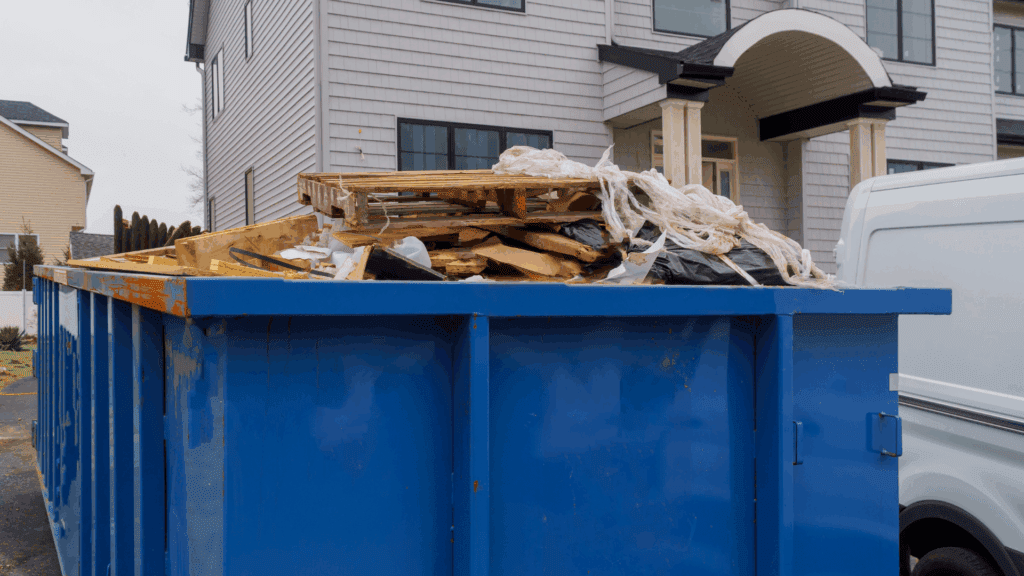
- Hauling Containers: Hauling containers are the main component of a waste management business. They come in all shapes and sizes and can be adapted to suit your particular needs. With smaller containers for interior collection points, up to large-scale roll-off trucks for exterior collection like a 40-yard dumpster for bigger commercial jobs, you’ll need to analyze your site’s specific requirements before investing in any equipment.
- Carts: Carts are used to transport smaller volumes of waste. Depending on the size of your facility, you may need anything from a few dozen small carts for individual waste collection points or several larger carts for centralized collection points.
- Equipment for Internal Collection and Transportation: You’ll need to invest in equipment for the collection, transportation, and sorting of waste within your facility. This can include bins, conveyors, compactors, chutes, and more.
- Compactors and Open-Top Containers: Compactors and open-top containers are used for the storage of large amounts of waste before it is collected. These containers can be either stationary or mobile, depending on your needs.
Once you’ve invested in the necessary supplies and machinery for your business, make sure that you receive appropriate training on their use. This will help ensure that your employees are using the equipment properly, efficiently, and safely.
Research Different Vendors and Compare Costs
In addition to researching the right equipment for your business, you’ll also need to compare different vendors in order to get the best deal. It’s important to understand what features different vendors can offer and make sure that they are reliable and trustworthy. You may also want to look into any special offers or discounts that could help reduce costs. Additionally, it’s a good idea to seek out experienced vendors who can offer advice and support when it comes to setting up the most effective waste management program for your business.
Consider Investing in Technology Solutions
Finally, you may want to consider investing in technology solutions that can help streamline the waste management process. By utilizing products such as waste route optimization software, you can reduce labor costs and improve the efficiency of your collection. Additionally, investing in such solutions can improve customer satisfaction and help you reach your waste diversion goals.
Select Quality Equipment That Will Last
First of all, don’t overlook the fact that waste management businesses require high-end equipment and highly durable materials. If you try to cut expenses by 10% in the beginning, it could come back to cause you more harm than good in the long run.
When you are choosing equipment for your waste management system, it is essential to select pieces made from durable materials. High-quality tools and materials may set you back more initially but will save money in the future by preventing expensive replacements. Investing in well-crafted items now means that they can keep up with a consistently efficient system over time.
Additionally, make sure to frequently maintain your equipment and switch out worn parts promptly. Regular upkeep will help protect you from any serious trouble or functioning issues with the machinery, ensuring that your waste management runs at its peak performance.
6. Hire Trained Waste Management Staff
We discussed every detail in regard to equipment, technology, and plans for marketing, but remember that the staff who will be at the core of your operations are just as integral. Therefore, it is of utmost importance to select them with great care. Do not forget any aspect during this process! Keep in mind that waste management can be a mundane job that requires ample patience from everyone involved – those people may even become lifelong friends along the way. Thus, keep an open heart when navigating through this endeavor, you never know what valuable relationships could emerge out of such decisions!
So be ready to pay decently, provide a healthy working environment, and motivate them with friendly words of encouragement. Show them that you care about their well-being, and they will show it back by being loyal hardworking members of your team.
It also helps to have an experienced team leader, who will keep everyone organized and work towards the same goal, especially when paired with driver management tools that keep routes and schedules on track.
Outsourcing Your Collection Service
Finally, if you are looking to outsource this service, you should be extra careful with your selection process. Check their experience, ask for references, and look into their safety measures in order to make sure that they meet your business’ standards. Don’t forget to explain the rules and regulations of your workplace to avoid conflicts.
7. Create an Effective Waste Management System
When it comes to setting up a waste management system, you’ll need to create a plan that works for your facility. Depending on the size and type of business, different methods may be more effective than others. Try mapping out procedures as much as possible – from collection points to transportation routes – in order to set up an efficient system. And if you need an extra hand, our team at Docket is here to provide assistance. Investigate our Waste Management Software that will efficiently reduce your workload by accurately mapping out transportation routes and collection points.
Anyhow, you may want to consider using color-coded containers or bins for different categories of waste. This makes sorting easier and could help improve the efficiency of your system overall. Additionally, make sure that your employees are aware of the appropriate collection methods and procedures so they can help keep everything running smoothly.
Develop Clear Waste Routes and Schedules
When it comes to waste management, having a clear route and schedule is just as important as investing in quality equipment. This way, you’ll be able to plan out pick-up times for your dumpsters or containers and ensure that everything runs on time using route scheduling and dispatching tools. Additionally, make sure to keep detailed records of all pickup times for each facility so that you can keep track of how often your waste needs to be collected.
Finally, it’s important to stay on top of any changes in the industry. Regulatory and environmental policies are constantly being updated and revised, so it is essential to remain informed on any updates that could affect your business.
Set Up a System to Track Waste Collection Data
Once you have a waste management system in place, it’s important to track its performance. Keeping accurate records of all your waste collection data is essential for business owners who need to know how their systems are running. Collecting and analyzing this data can help you identify any areas of improvement and ensure that your system is working as efficiently as possible. Our waste management software can automate this tracking for you. Automating your billing alongside your route data keeps invoices accurate and payments on time. Detailed reports also help you catch problems before they turn into bigger issues.
Determine Which Types of Waste You Can Collect
In order for your waste management strategy to be successful, you need to know what types of waste you can and cannot collect. Different materials will require different handling procedures, so it is important to determine which ones are suitable for collection in advance. You should also consider the environmental impact of any materials that you are collecting, such as those with hazardous chemicals or materials. Additionally, make sure to research any local regulations that may apply to the disposal of these materials.
By following the steps outlined above, you can create an effective and efficient waste management system for your business. Proper planning, regular maintenance, and careful tracking are all key components of creating a successful system – so don’t be afraid to ask for help if you need it. With the right tools and attitude, managing waste can be easier than you think!
And for those of you who want a hassle-free solution – Docket’s Waste Management Software is here to the rescue.
8. Market Your Business to Attract Customers
Once you have developed your waste management system, it’s time to start attracting customers. Consider marketing your services through various channels such as social media, radio, television, or even print ads. You can also reach out to local businesses that may need help with their waste management systems and offer them a competitive rate for your services. Make sure to promote your services in a way that emphasizes the benefits for potential customers.
Overall, with the right strategies in place, you can ensure that your waste management runs at its peak performance.
Develop an Advertising Campaign for Your Business
In today’s digital age, businesses need to think beyond traditional advertising methods and tap into the power of social media. Developing an effective digital marketing campaign can help you spread the word about your business and reach a wider audience. You can use a combination of paid ads, organic content, influencer outreach, and even events to get people talking about your business. Additionally, you can use data-driven marketing techniques to track the success of your campaigns and make necessary adjustments in order to optimize your results. And yeah, you got it by now… if you need help, Docket is here for you, so don’t forget to reach out and check out the design and SEO services that we offer.
Optimize Your Website for Search Engines
Having a well-designed website is essential for any business, and optimizing it for search engines can help make sure that potential customers are able to find your services. Utilizing techniques such as keyword optimization and content creation can help you boost your rankings in the search engine results page (SERP). Additionally, make sure to include calls-to-action and contact information on your website, so prospective customers can easily reach out for more information.

By following these tips, you can ensure that your waste management system is running smoothly and efficiently. With the right strategies in place, you can minimize any disruptions to service and keep track of how often your waste needs to be collected. Don’t forget to check out our service page to see how we can help you: Dumpster Rental SEO Services.
Utilize Social Media Platforms to Reach More People
Social media provides a great platform to reach potential customers and spread the word about your business. Consider creating engaging content on platforms such as Facebook and Instagram, which can help you build up a following. Additionally, you can target specific audiences with paid ads or sponsored posts, so you can maximize your visibility and attract more leads.
Your Business Building Roadmap
To guarantee the most successful waste management, follow these steps for optimal results. You’ll not only broaden your customer base but also boost exposure for your services.
1. Define your target waste streams: choose specific niches that align with your local permits and equipment.
2. Establish an organized collection system: design efficient routes and consistent pickup schedules.
3. Implement targeted marketing campaigns: build relationships with local commercial contractors and optimize your digital presence.
4. Recruit and support trained personnel: focus on hiring reliable drivers and supervisors.
5. Maximize your search engine visibility: make sure local customers can easily find your services online.
6. Prioritize client satisfaction: gather regular feedback to refine your operations and earn repeat business.
By having a well-crafted plan in place, you can handle any quantity of generated waste without compromising on its environmental impact simultaneously – enabling success for your waste management business!
Starting A Waste Management Business Takes Time!
It may take some time to develop your system and fine-tune it, but with hard work and perseverance, you can ensure that your efforts are successful. Staying current on industry trends also helps you spot new opportunities, from emerging niches to better equipment, before your competitors do.
If entrepreneurship in the waste niche is what really interests you, consider taking a look at our article on how to start a dumpster rental business.
Ready to run your business like a pro from day one? Get a tour of Docket.
FAQs about starting a waste management business
Startup costs vary widely depending on your setup, but most new haulers begin with one truck and a small fleet of dumpsters. Used equipment can lower your upfront costs significantly.
Absolutely. Many waste haulers start with a single roll-off truck and scale up over time. Pairing it with the right number of dumpsters can get you operational quickly.
Not necessarily. If you choose an under-CDL truck (under 26,001 lbs GVWR), you can operate without a commercial driver’s license. This is a popular option for new haulers.
While standard residential curbside pickup offers highly stable recurring revenue, specialized niches like commercial dumpster services and construction roll-offs generally command much higher profit margins. Entrepreneurs can also target rapidly growing sectors such as electronic waste recycling, medical waste disposal, or organic composting to separate themselves from larger, traditional haulers. Focusing on one or two specialized niches allows you to optimize your initial equipment budget and target high-value local contracts.
Residential collection typically operates on high-density routes with lower profit margins per stop, relying on steady monthly subscriptions or annual municipal agreements. Commercial collections feature much higher contract values with fewer total stops – but it requires larger equipment and involves a longer sales cycle. Many startup haulers begin with residential accounts to quickly establish predictable cash flow before leveraging that stability to bid on commercial and industrial contracts.
Securing the necessary environmental compliance documents, solid waste transporter permits, and local municipal licenses typically takes anywhere from three to twelve months. Because these regulatory timelines vary widely depending on state and local jurisdictions, it is highly recommended to initiate the paperwork well before purchasing expensive hauling vehicles. Operating without the proper registrations can result in severe municipal fines, legal liabilities, or immediate operational shutdowns.